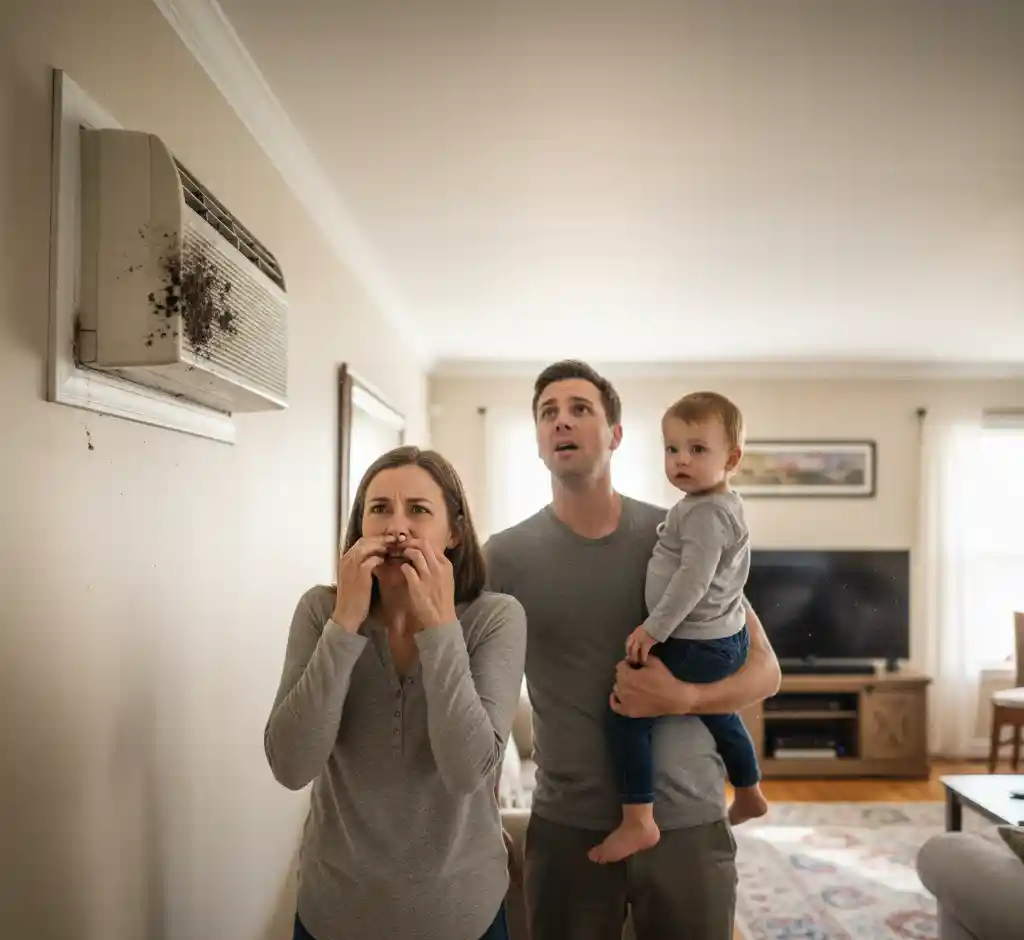
You walk into your home, take a deep breath, and… yuck.
Is that burning toast? Dirty socks? Or something worse?
Your HVAC system often “talks” to you through smells. Some odors, like burning dust when you first turn on the heat, are normal. Others, like the smell of rotten eggs, indicate a life-threatening emergency.
At Lowers HVAC, we want to keep your home safe and comfortable. Use this guide to decode what your nose is telling you and decide if you need to call a professional.
⚠️ SAFETY WARNING: Smell Gas?
If you smell Rotten Eggs (Sulfur), you may have a natural gas leak.
Open windows immediately.
Evacuate the house.
Call your gas utility company or 911 from a safe distance.
DO NOT turn on lights or use your phone inside.
Quick Reference: The HVAC “Smell-o-Meter”
Don’t have time to read the whole article? Find your smell in this chart immediately.
| Smell Description | Likely Culprit | Danger Level | Action Required |
| Rotten Eggs / Sulfur | Natural Gas Leak | 🔴 CRITICAL | Evacuate & Call 911 |
| Electrical / Ozone | Overheating Motor / Wiring | 🟠 HIGH | Turn off system & Call Pro |
| Burning Dust | Dust burning off heat exchanger | 🟢 LOW | Wait 30-60 mins (Normal) |
| Musty / Dirty Socks | Mold or Bacteria on coils | 🟡 MEDIUM | Schedule Cleaning |
| Sewage | Dried P-trap / Plumbing Vent | 🟡 MEDIUM | Check Plumbing / Call Pro |
| Chemical / Acetone | Refrigerant Leak | 🟠 HIGH | Call Pro immediately |
| Oil / Exhaust | Oil Furnace issue / Vent block | 🟠 HIGH | Turn off & Inspect |
1. The Smell of “Burning Dust”
Context: You just turned on your furnace for the first time this winter.
Verdict: Normal.
During the summer, dust settles on your furnace’s heat exchanger and burners. When the heat kicks on for the first time, that dust burns off. The smell should dissipate within 30 to 60 minutes.
-
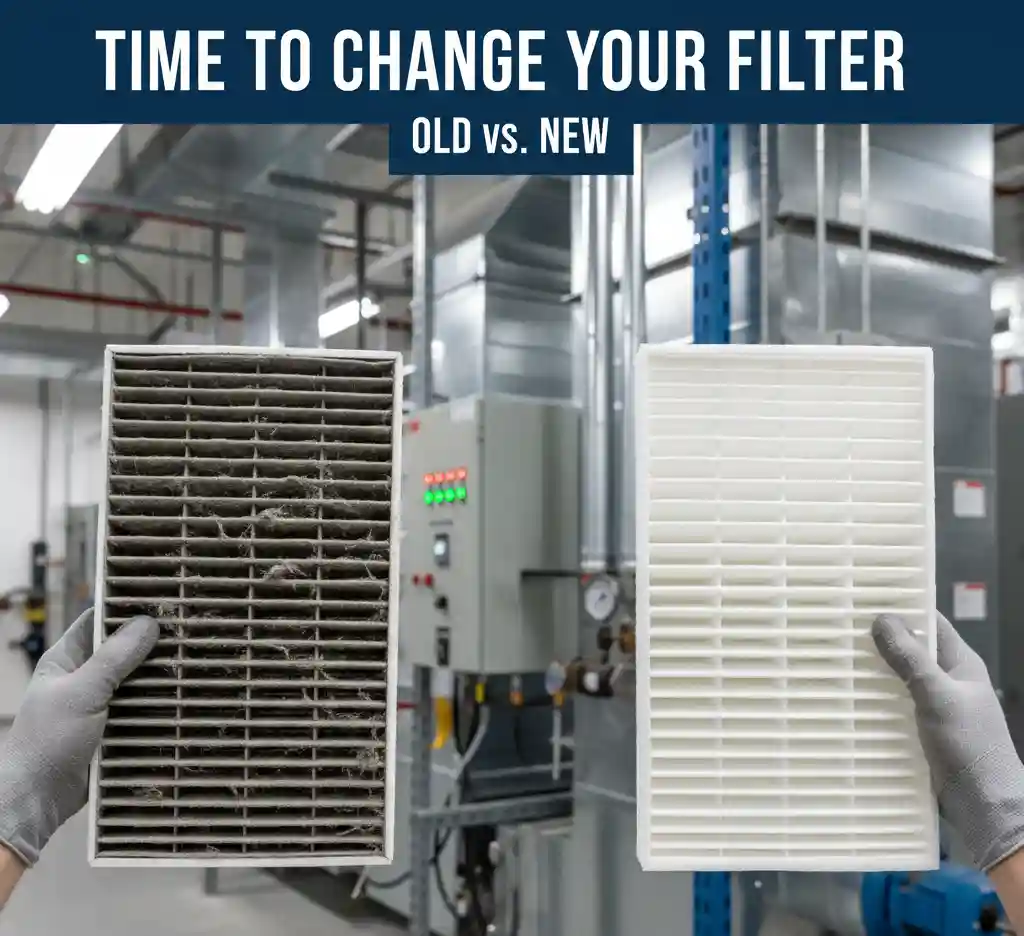
DIY Fix: Open a window for ventilation. If it lasts longer than an hour, check your air filter.
2. The Smell of “Dirty Socks” or “Musty Basement”
Context: The smell happens when the AC is running or the Heat Pump goes into defrost mode.
Verdict: Dirty Coils / Mold.
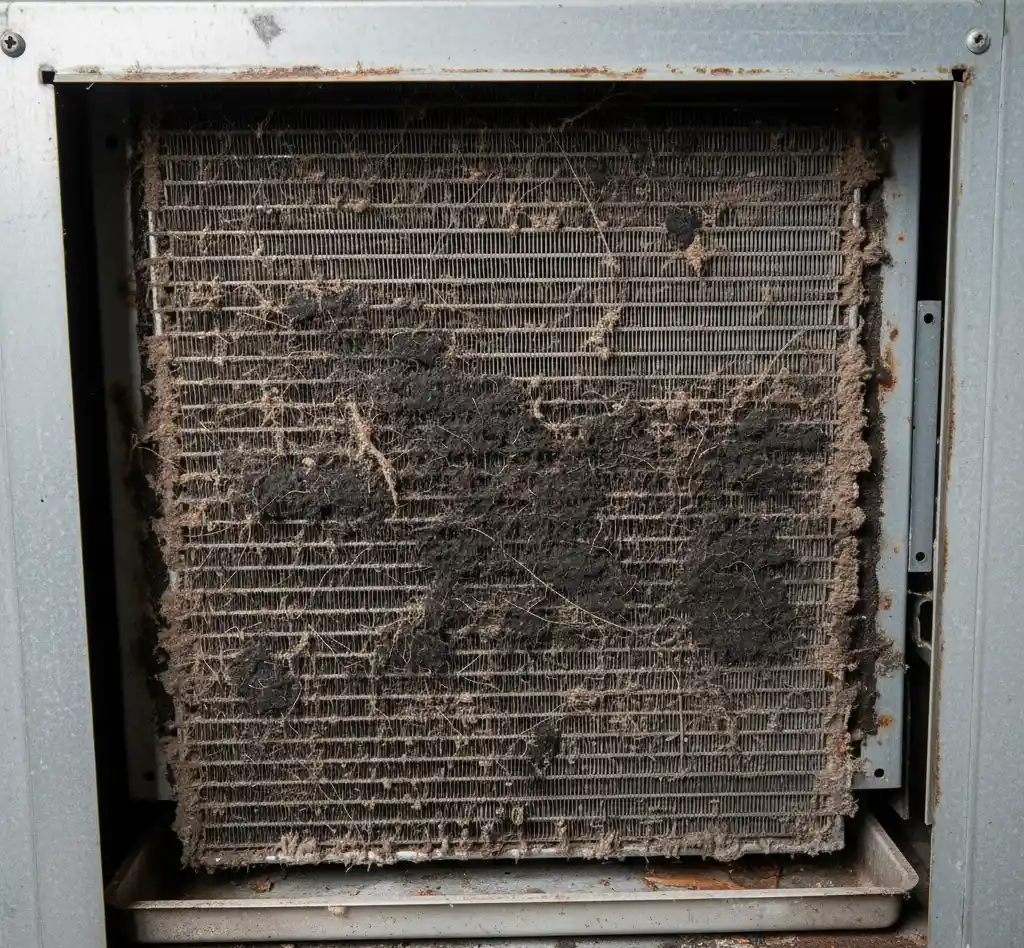
This is notoriously called “Dirty Sock Syndrome.” It happens when moisture, dust, and bacteria build up on your evaporator coils. It’s not immediately dangerous, but it is unhealthy for your air quality.
-
Solution: You need a professional coil cleaning and possibly a UV light installation to kill bacteria.
3. The Smell of “Burning Plastic” or “Fish”
Context: A sharp, acrid electrical smell.
Verdict: Electrical Failure.
This usually means a plastic wire coating is melting, a motor is overheating, or a capacitor has blown.
-
Action: Shut off your system at the breaker immediately. Running it could cause a fire or destroy the compressor.
Repair vs. Cleaning Costs (2025 Estimates)
If the smell indicates a mechanical problem or a need for deep cleaning, here is what you might expect to pay a local contractor.
| Service | Average Cost | DIY Possible? |
| Professional Coil Cleaning | $150 – $400 | No (Requires disassembly) |
| Duct Cleaning | $300 – $700 | No (Requires vacuum truck) |
| Blower Motor Repair | $400 – $800 | No (Electrical hazard) |
| UV Light Installation | $400 – $900 | No (Electrical work) |
| System Tune-Up | $79 – $149 | No (Diagnostic) |
4. The Smell of “Chemicals” or “Sweet Ether”
Context: A sweet, chloroform-like smell near the indoor unit.
Verdict: Refrigerant Leak.
Refrigerant (Freon/Puron) is vital for cooling. A leak not only hurts your AC’s performance but is also harmful to breathe and bad for the environment.
-
Action: You need a certified technician to locate the leak, repair it, and recharge the system.
5. The Smell of “Sewage”
Context: Smells like a bathroom backup coming from the vents.
Verdict: Plumbing or P-Trap Issue.
This is often not the HVAC equipment itself, but a dried-out “P-trap” or a cracked heat exchanger sucking in sewer gas.
-
Action: Pour water down your basement floor drains. If the smell persists, you need a pro to inspect the venting.
When to Call a Professional
Your nose knows. If a smell feels “wrong” or causes headaches/nausea, do not ignore it.
-
For Maintenance: (Mold, Dust, Dirty Socks) -> Schedule a cleaning to improve air quality.
-
For Repairs: (Burning, Electrical, Chemicals) -> Schedule a diagnostic to prevent fire hazards.